Phase 1 clinical trial
Paper published 2024-11-13The biological question
Diffuse midline gliomas grow within structures of the brain and spinal cord that control essential functions. Their location and infiltrating growth make treatment exceptionally difficult. A Stanford Medicine team tested whether a patient's own immune cells could be engineered to recognize these tumors through a molecular marker on their surface.
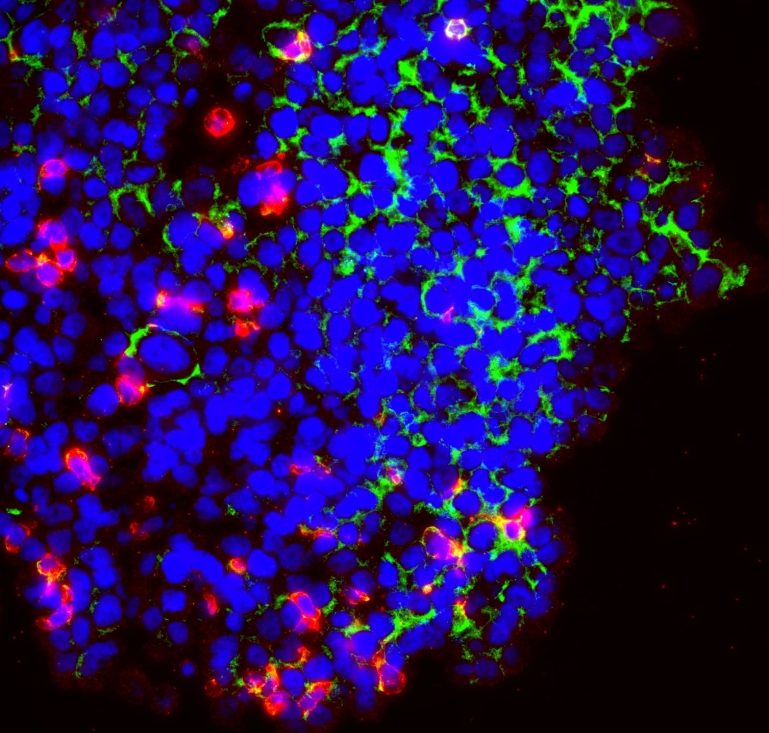
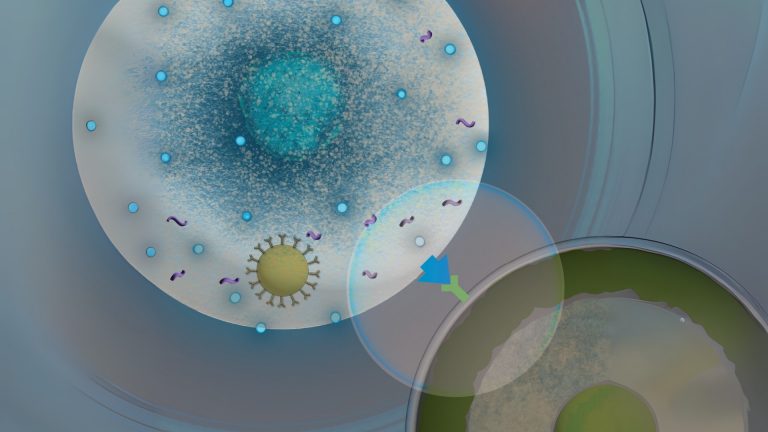
The study focused on tumors carrying the H3K27M mutation. Earlier laboratory work had identified high expression of GD2, a cell-surface molecule, in this group of cancers. Researchers added a chimeric antigen receptor, or CAR, to patients' T cells so the cells could recognize GD2 and mount an antitumor response.
How the trial worked
The Nature paper reports the completed first arm of a phase 1 trial. Thirteen patients enrolled, and 11 received the initial intravenous infusion on study after chemotherapy that reduced competing immune cells. Two intravenous doses were tested. Patients showing clinical or imaging benefit could receive additional doses delivered into the brain's cerebrospinal fluid; nine went on to receive those infusions.
Safety was a primary result
The main questions concerned manufacturing and safety. The team successfully manufactured the cell products, but the higher intravenous dose caused dose-limiting cytokine release syndrome in three patients. The lower dose became the maximum tolerated intravenous dose. Tumor-related inflammation also caused neurological effects requiring close monitoring and active treatment. These safety findings are part of the result, rather than a detail separate from the therapy's promise.
What the team observed
The researchers also observed signs of activity against the cancer. Four participants had major reductions in tumor volume of 52%, 54%, 91% and 100%, and three others had smaller reductions. Nine showed neurological benefit on the study's clinical assessment. One complete response remained ongoing more than 30 months after enrollment at the time reported in the paper.
These observations provide evidence that engineered immune cells can reach and act against this form of brain cancer. They also create new research questions: why do some tumors respond more strongly, how should the cells be delivered, and how can inflammation be controlled while preserving antitumor activity?
What still needs testing
The study cannot yet answer whether the treatment improves survival across the wider patient population. It was small, lacked a randomized comparison group and selected participants using specific eligibility criteria. A complete imaging response is also not the same as a proven cure. The work establishes a direction for further clinical research, with both meaningful patient responses and substantial safety demands informing the next experiments.
Key terms
- CAR T cell
- An immune cell engineered to recognize a target.
- GD2
- The cell-surface molecule targeted in this study.
- Phase 1 trial
- An early clinical study emphasizing feasibility, dose, and safety.
Original publication
Monje, M. et al. Intravenous and intracranial GD2-CAR T cells for H3K27M+ diffuse midline gliomas. Nature 637, 708–715 (2025).
Published online November 13, 2024; journal issue January 2025. Phase 1 trial: NCT04196413.
Read the paper · DOI 10.1038/s41586-024-08171-9 ↗Stanford’s account of the study ↗
Sources reviewed & Stanford connection
Primary journal paper and official Stanford Medicine account reviewed.
Stanford Medicine trial led by Michelle Monje, Crystal Mackall, and colleagues.
This is an original explanatory article about the cited study. It is not a new paper or Stanford-authored news report.