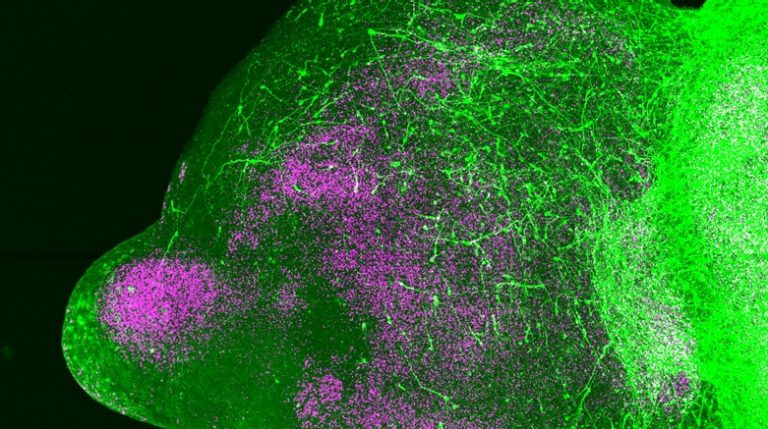
Moving RNA inside neurons
A programmable CRISPR transport system moves existing RNA inside cells, allowing researchers to test how local protein production shapes neuronal structure.
Read the article →Following the cells, signals and developing circuits of the nervous system.
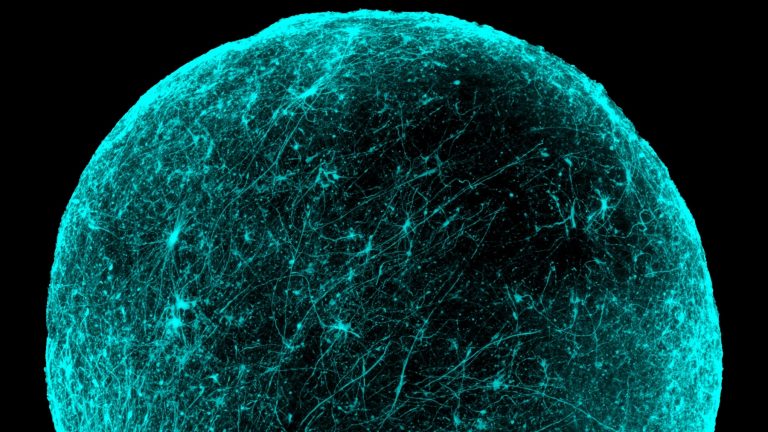
Neuroscience investigates how nervous systems develop, process information and change with experience or disease. At the cellular scale, researchers study how neurons send electrical signals and communicate at synapses. They also examine the supporting cells and tissue environments that help neural circuits function. Understanding a circuit requires both its components and their interactions.
A Stanford-led study by Fikri Birey and colleagues assembled stem-cell-derived spheroids resembling two forebrain regions. Neurons migrated between them and formed functional connections. Live imaging made a normally difficult-to-observe developmental process accessible, while electrical recordings tested whether the cells communicated after migration. The experiment linked cellular movement with emerging circuit function.
The same system revealed altered migration in cells derived from people with Timothy syndrome, a rare calcium-channel disorder. This offered a way to connect a genetic change to a cellular behavior. A laboratory model is particularly useful when researchers can change one condition and observe the consequences, rather than relying only on an association.
Spheroids reproduce selected aspects of neural development. They do not contain the full anatomy, circulation or experience of a human brain. Results should therefore identify exactly what was measured: migration, molecular identity or electrical communication. A change in cultured cells can guide further experiments without establishing a treatment effect in people or explaining every feature of a neurological condition.
Neuroscience findings operate at different levels. Microscopy may show where cells are located, electrical recordings may reveal communication, and behavioral measurements may probe the consequences for an animal. A result at one level does not automatically establish the next. The strongest explanations make those connections explicit and state which links remain hypotheses.
Models make selected processes accessible to observation and intervention. A neural assembloid can reveal cell migration or signaling between components that would be difficult to isolate in a developing brain. Its usefulness depends on the question being asked. It should be judged by the biological process it measures rather than by how closely a photograph resembles an entire brain.
These studies connect to the field. Their specific systems and methods define what can be concluded.
A programmable CRISPR transport system moves existing RNA inside cells, allowing researchers to test how local protein production shapes neuronal structure.
Read the article →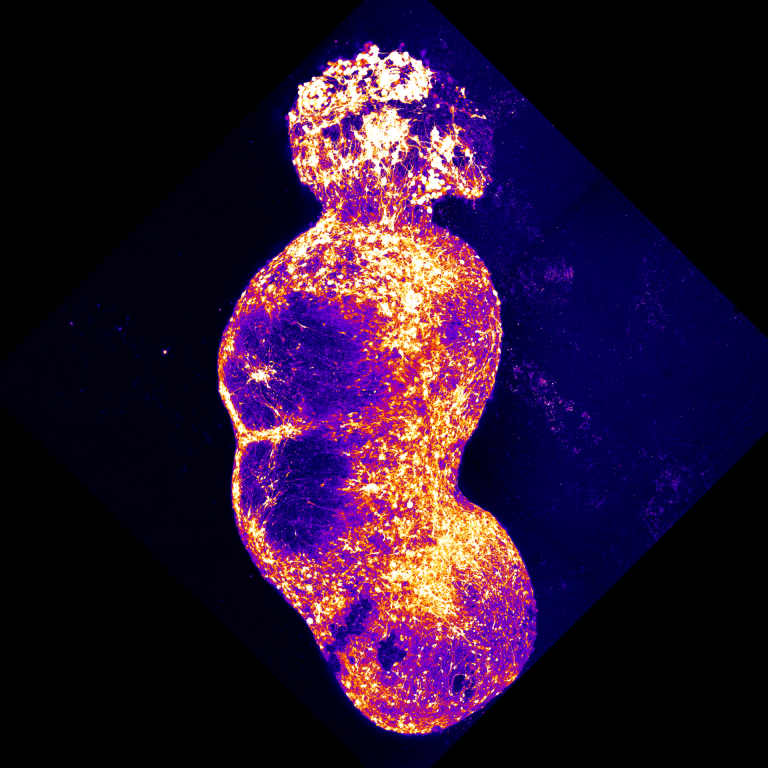
Four connected human stem-cell models let researchers watch sensory signals travel from peripheral neurons toward the cortex—and ask how pain-associated mutations change the whole circuit.
Read the article →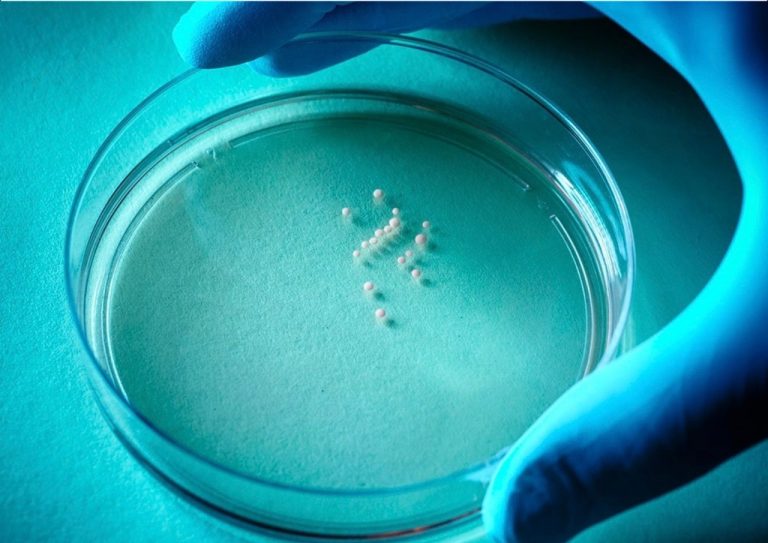
Patient-derived organoids and assembloids test an antisense strategy that reduces a disease-associated calcium-channel exon without removing the channel itself.
Read the article →