Preclinical research
Paper published 2026-05-15The question: how long should a signal last?
An engineered T cell needs a strong response when it encounters cancer, but continuous signaling can undermine the same cell over time. Chimeric antigen receptors sometimes activate without binding their intended target, a problem called tonic signaling. Even appropriate stimulation can lead to cell death or dysfunction if its duration is poorly controlled. Stanford researchers asked whether a small design change could let the cell regulate its own receptor abundance.
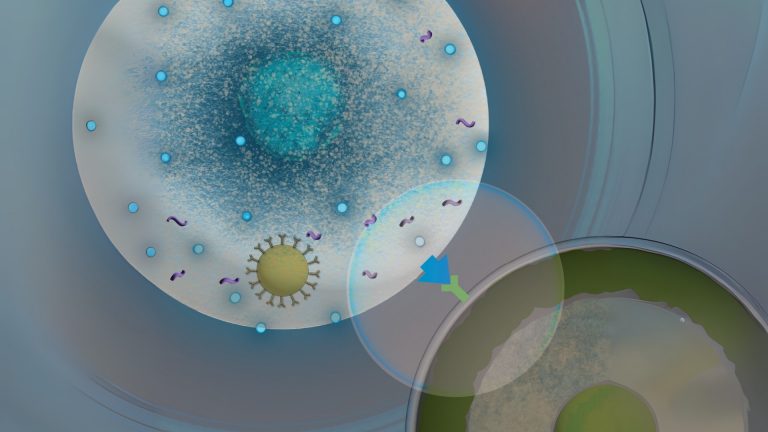
The study, led by Jeremy Bjelajac and Crystal Mackall, begins with an ordinary feature of immune biology: activated cells can remove proteins from their surface. Proteases cut selected extracellular portions away, changing the signals a cell receives. The authors investigated whether this existing machinery could become a compact feedback mechanism for synthetic receptors, rather than requiring a separate drug-controlled switch.
Borrowing a natural control mechanism
The researchers profiled surface-protein changes in activated human T cells and screened candidate cleavage sequences from natural protease substrates. This identified a short segment derived from CD62L that could make other surface proteins responsive to activation-dependent cleavage. The resulting activation-induced release module, called AIR, contains 15 amino acids and relies on the T cell protease ADAM17.
Embedding the motif into a CAR created a feedback relationship: signaling promoted receptor shedding, which reduced the available receptor population. Surface expression could recover after the activating stimulus ended. The distinction matters because shedding a receptor is different from permanently deleting its gene. A cell can temporarily change its sensitivity while retaining the ability to make new receptors later.
Testing function beyond receptor abundance
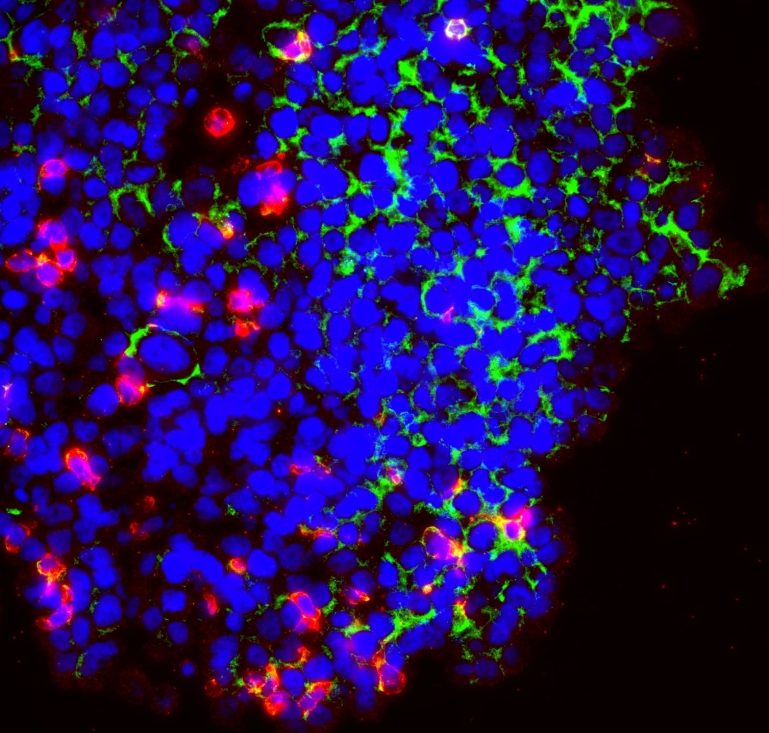
The authors tested AIR in receptors prone to tonic signaling and compared engineered cells with conventional counterparts. AIR reduced chronic signaling and exhaustion-associated features and improved antitumor activity in preclinical models. They also examined a CD19-targeting receptor that did not show the same tonic signaling problem. In that setting, AIR reduced activation-induced cell death and supported expansion after stimulation, suggesting that its effects extend beyond correcting one faulty CAR architecture.
The paper then explored whether the motif could regulate other cell-surface functions. Conditional removal of a masking element enabled a sequential antigen-recognition circuit. Separate CRISPR knock-in experiments placed AIR into the endogenous receptors FAS and TGFBR2, allowing activation-linked shedding while preserving baseline responsiveness. These extensions show that receptor abundance can become an engineering variable across several pathways, rather than a fixed consequence of gene expression.
Where the evidence is limited
The mechanism still has constraints. Shedding depends on the activation state and availability of the cell’s own protease machinery, so performance varied with the stimulus and could decline after prolonged stimulation. A motif taken from a human protein also does not guarantee an entirely non-immunogenic final receptor: a new molecular junction could create an unfamiliar peptide. These are questions for direct testing rather than assumptions of safety.
The animal efficacy experiments used several NSG xenograft models. Those mice lack key immune functions, limiting conclusions about interactions with the broader immune system and about damage to normal tissues bearing a target antigen. The authors also identify unresolved mechanistic issues: some dependence experiments rely heavily on protease inhibitors, and reporter measurements cannot fully reveal the upstream signaling dynamics that explain improved cell behavior.
A design principle to investigate
The next challenge is to establish when less receptor activity produces a better therapeutic response in more representative systems. Studies in immunocompetent or humanized models should track both tumor control and normal-tissue effects over time. AIR offers a clear experimental principle: a cell’s therapeutic performance depends on the timing and regulation of a signal, as well as its peak strength. Clinical benefit remains to be established.
Key terms
- Tonic signaling
- Receptor activity that occurs without the intended antigen stimulus.
- Protease
- An enzyme that cleaves proteins.
- Activation-induced release
- A design that allows activated T cells to shed selected surface receptors.
Original publication
Bjelajac, J. R. et al. Cell-autonomous control of CAR signaling and receptor shedding via ADAM17-mediated proteolysis. Cell 189, 3883–3902.e23 (2026).
May 15, 2026
Read the paper · DOI 10.1016/j.cell.2026.04.037 ↗Stanford research coverage ↗
Sources reviewed & Stanford connection
Primary paper abstract, main results and discussion read; official Stanford coverage checked. No clinical efficacy demonstrated.
Jeremy R. Bjelajac and Crystal L. Mackall; Stanford Center for Cancer Cell Therapy and Stanford Cancer Institute.
This is an original explanatory article about the cited study. It is not a new paper or Stanford-authored news report.