Preclinical laboratory study
Paper published 2024-04-24The biological question
Timothy syndrome type 1 links a tiny change in DNA to a severe disorder affecting several organs. The mutation occurs in an alternatively spliced segment of CACNA1C, which encodes a calcium-channel component. Stanford researchers asked whether changing how cells assemble the gene’s RNA message could reduce the dysfunctional version of the channel. The strategy was designed around a specific mutation and cellular mechanism, rather than a general treatment for autism or epilepsy.
How the experiments worked
The relevant RNA segments, exons 8A and 8, are mutually exclusive alternatives. During normal development, their relative use changes. In patient-derived neurons, the disease-associated exon 8A remained unusually abundant. The team used RNA measurements and engineered splicing reporters to investigate this pattern. Those experiments supported a reinforcing mechanism: the Timothy syndrome variant did not simply change the protein it encoded; it also favored inclusion of the exon carrying that variant.
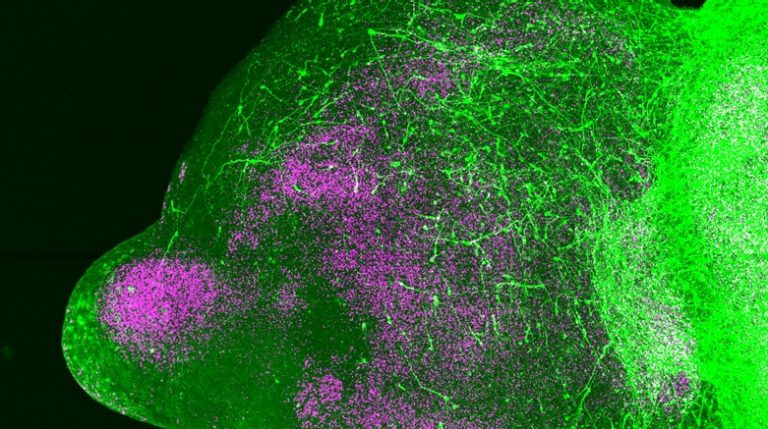
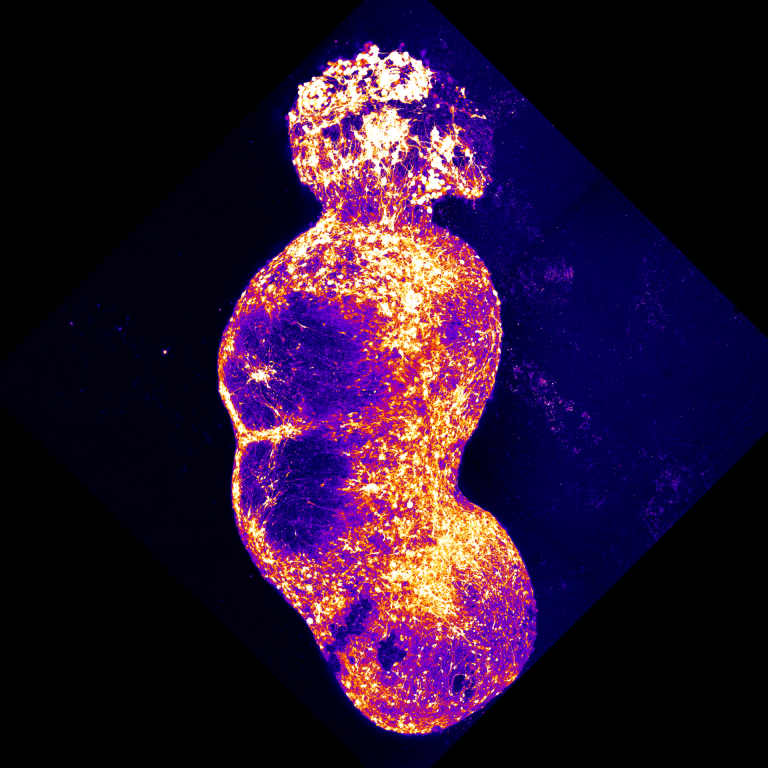
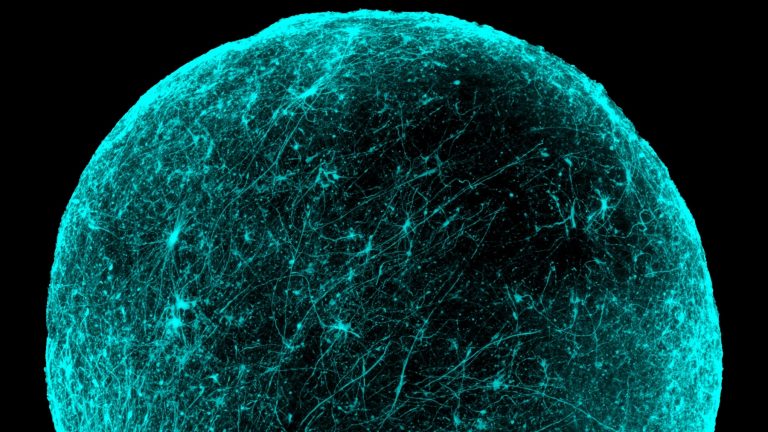
The investigators designed and screened antisense oligonucleotides, short modified nucleic-acid molecules that bind a selected RNA sequence. Here their purpose was to change splicing rather than destroy the entire message. The experiments included neural cells derived from three individuals with Timothy syndrome and an engineered comparison line. Candidate molecules were tested in cortical organoids, simpler neural cultures, and forebrain assembloids that allow inhibitory interneurons to migrate into cortical tissue.
What the researchers found
Selected oligonucleotides reduced exon 8A inclusion and shifted RNA processing toward exon 8. This did not require reducing the overall amount of the calcium-channel protein. The distinction is central to the strategy: a broadly necessary channel can be retained while reducing a particular disease-associated form. The study then connected the molecular change to cellular function using electrical recordings and calcium imaging, rather than assuming that a corrected RNA measurement necessarily meant healthier neurons.
Treated patient-derived neurons showed improvement in delayed channel inactivation and the abnormally prolonged calcium response following stimulation. In forebrain assembloids, the intervention also improved defects in interneuron migration. For an in vivo test, the team used human cortical organoids transplanted into rat brains. An intrathecal antisense administration changed splicing in the transplanted human tissue and rescued measured calcium abnormalities and activity-dependent dendritic retraction. This was a human-cell transplantation experiment, not a clinical trial in people with Timothy syndrome.
Why the biology matters
The work illustrates how a molecular explanation can determine a therapeutic design. Blocking a channel is a different intervention from changing which version a cell produces. The experiments also connect several scales: RNA processing, channel behavior, intracellular calcium, cell movement, and neuronal structure. Organoids and assembloids supplied complementary tests, while transplantation placed human neurons in a living environment that supports greater maturation and circuit integration than culture alone.
Limits and unanswered questions
Important limitations remain. The candidate oligonucleotides do not distinguish healthy exon 8A from its mutant counterpart. Safety testing in cultured cells cannot establish short- or long-term safety after administration to a person. The study did not show that neurological symptoms or cardiac arrhythmias in patients improve. It also focused on type 1 disease, whose mutation is in exon 8A; a superficially similar mutation in exon 8 requires separate investigation rather than an assumption of equivalent benefit.
Timing is another unresolved biological question. Some developmental changes may occur before a treatment could be given, and correcting channel behavior later may not reverse earlier cell-specification errors. The authors call for further pharmacology, more specific targeting, evaluation in cardiac models, and examination of developmental treatment windows. The demonstrated result is a preclinical rescue of selected disease-relevant cellular phenotypes. Its value lies in a testable route from mechanism to intervention, with clinical efficacy still to be established.
Key terms
- Alternative splicing
- Processing a gene’s RNA into messages that include different combinations of segments.
- Antisense oligonucleotide
- A short nucleic-acid molecule designed to bind a selected RNA sequence.
- Interneuron migration
- Movement of developing inhibitory neurons into the tissue where they will form circuits.
Original publication
Chen, X., Birey, F. et al. Antisense oligonucleotide therapeutic approach for Timothy syndrome. Nature (2024).
Published online 2024-04-24.
Read the paper · DOI 10.1038/s41586-024-07310-6 ↗Read the peer-reviewed paper ↗
Sources reviewed & Stanford connection
Open Nature full text, main results and discussion read; official Stanford Medicine report used for affiliation and context.
This is an original explanatory article about the cited study. It is not a new paper or Stanford-authored news report.