A built-in pause for engineered T cells
A short protein motif recruits a natural shedding mechanism to regulate CAR signaling and preserve cell function in preclinical studies.
Read the article →An experimental guide to the measurement, the biological question, and the limits of interpretation.
CRISPR tools use a targeting system adapted from bacterial biology to change selected DNA sequences or, in some experimental designs, regulate gene activity. Researchers compare the effects of a targeted perturbation with suitable controls to test a biological hypothesis. The design depends on whether the question concerns sequence, expression or the contribution of a gene to a cellular process.
The measured result is usually downstream: growth, survival, molecular expression, morphology or another defined phenotype. A well-chosen readout can connect a genetic intervention to a functional consequence. Independent guides, control conditions and complementary experiments help distinguish the intended biological effect from artifacts of the intervention.
Cutting a DNA sequence, reducing a gene’s expression, and increasing its expression are different interventions. A study should explain which one it uses and why that change tests the proposed mechanism. The readout also needs to match the question: cell survival alone may miss effects on differentiation, secretion, or interactions with neighboring cells.
Non-targeting controls help estimate background effects of the experimental system. Multiple guides aimed at the same gene can strengthen confidence that the result is not peculiar to one guide. A rescue experiment, when feasible, asks whether restoring the relevant function reverses the phenotype. Each control tests a different alternative explanation.
A pooled screen can nominate many candidate genes at once. It does not automatically explain how they work. Researchers often validate candidates individually and combine molecular measurements, imaging, and additional perturbations. Results depend on the cell type, the timing of the intervention, and the conditions in which the phenotype was measured.
Editing can be incomplete or introduce unintended changes; a result in one cellular model may not generalize to another tissue or organism.
A short protein motif recruits a natural shedding mechanism to regulate CAR signaling and preserve cell function in preclinical studies.
Read the article →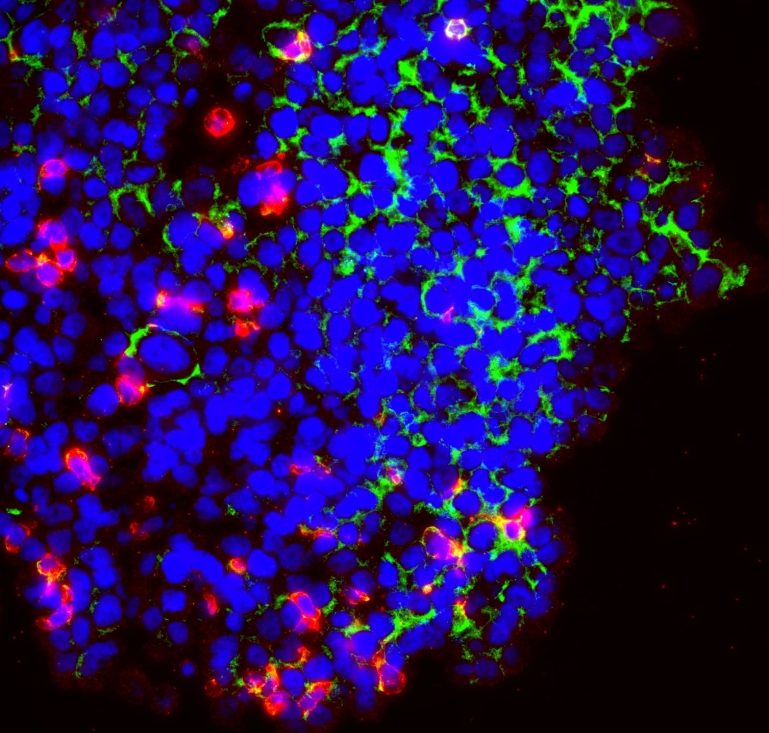
A Stanford team used genetic screens to equip cancer-killing cells with receptors that follow metabolic signals into tumors.
Read the article →
SDR-seq pairs targeted genomic sequencing with RNA measurements in the same cells, helping connect precise variants to cellular behavior.
Read the article →